m-Cresol
-
- Category :
Dyestuffs and Pigments
- CAS NO : 108-39-4
- EC NO : 203-577-9
- Molecular Formula : C7H8O
- Main Specifications : 99% min
- Synonyms : 3-Hydroxytoluene;3-Methylphenol;Meta-Cresol;m-methylphenol;Hydroxy-3-methylbenzene;3-Cresol;3-methyl-Phenol;1-hydroxy-3-methylbenzene;
Package: 25kg�,50kg 200kg
Uses : m-Cresol is an important organic synthesis intermediate, widely used in multiple industrial fields such as pesticides, pharmaceuticals, daily chemical industry, and analytical chemistry.
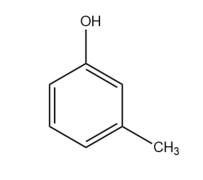
Molecular Structure:
Product description:
What is the chemical of m-Cresol ?
Appearance: A clear to pale yellow transparent liquid���;
Assay:99%min by GC�����;
IR Identity: conform to standard;
HNMR: conform to standard���;
carbon spectrum: conform to standard�;
Water by K. F.:0.5% max or as per the customer’s request�����;
Loss on drying:0.5% max. or as per the customer’s request���;
=============================================================================
m-Cresol is an important organic synthesis intermediate, widely used in multiple industrial fields: In the pesticide industry, it is used to synthesize insecticides such as Malathion, Phosphamidon, Carbofuran, and Dicofol. In chemical engineering and materials, it serves as a plasticizer for resins, an antioxidant for film negatives, and an intermediate for fragrances and dyes. In pharmaceuticals and daily chemicals, it is used in the production of Vitamin E and thymol, and also acts as a bactericide, fungicide, and disinfectant. In analytical chemistry, it is used as a standard solution for calibrating instruments such as analytical reagents and developers. Additionally, it is applied in the synthesis of products like antioxidant CA and dye DPA.
===============================================================================Synthesis Route:
The industrial synthesis of cresol mainly involves the following two methods:
Toluene Sulfonation and Alkali Fusion Method: Using toluene as the raw material, it first undergoes sulfonation to produce toluenesulfonic acid, and then undergoes alkali fusion reaction to obtain cresol, replacing the inefficient method of recovering from coal tar in the early days.
Isopropyltoluene Method (Acetone Coproduction Method): Using isopropyltoluene as the raw material, through oxidation and cracking reactions, m-cresol and acetone are produced simultaneously. This method has adjustable product ratio and high product quality.
These two methods are currently the main processes in industrial production, among which the toluene sulfonation and alkali fusion method is more common.


 Search Product