Valeric acid
-
- Category :
Organic chemicals and Derivatives/Aroma compounds
- CAS NO : 109-52-4
- EC NO : 203-677-2
- Molecular Formula : C5H10O2
- Main Specifications : 99% min
- Synonyms : 1-butanecarboxylic acid;Butanecarboxylic Acid;n-Pentanoic Acid;valerianic acid;VALERIC ACOD;Valeric acid;propylacetic acid;N-Pentanoic;3-(methylsulfanyl)propanoic acid;pentanoic acid;
Package: 25kg�����,50kg 200kg
Uses : an important organic compound widely used in various industrial fields
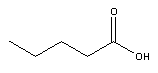
Molecular Structure:
Product description:
What is the chemical of Valeric acid ?
Appearance: colorless and transparent liquid, sometimes described as a light beige liquid, with an unpleasant odor, described as sour, sweaty, or putrid. ;
Assay:99%min by GC ;
IR Identity: conform to standard ;
HNMR: conform to standard ;
carbon spectrum: conform to standard ;
Water by K. F.:0.5% max or as per the customer’s request ;
Loss on drying:0.5% max. or as per the customer’s request ;
boiling point: At standard atmospheric pressure (760 mmHg), the boiling point is approximately 185-187 ° C;
BP: -18 ~-20°C
===============================================================================
purpose
Valproic acid is an important organic compound widely used in various industrial fields
Food and Spice Industry: As an edible spice (FEMA code 3101), it is used to mix fruit flavored beverages, candies, and baked goods such as apples, bananas, and grapes; Its esters (such as ethyl valerate) have a fruity aroma.
Pharmaceutical and Organic Synthesis: Used for synthesizing drugs, dyes, and other organic compounds.
Industrial solvents and additives: used as solvents and in the production of lubricants, plasticizers, etc.
Biological research: As a short chain fatty acid, it is a bacterial metabolite that is associated with allergic skin diseases and can activate the ROCK signaling pathway.
===============================================================================
synthetic route
An industrially feasible synthesis method is as follows:
Add a portion of 1-chlorobutane to a solvent containing magnesium metal and heat to initiate the reaction.
Add the remaining 1-chlorobutane dropwise within 3-10 minutes and maintain reflux.
After the dropwise addition is complete, continue to reflux until the reaction is complete.
Add the reaction mixture dropwise into a container containing dry ice within 10-30 minutes, and then let it rise naturally to room temperature.
Add MgHSO ?, stir and filter. The filtrate is acidified and purified to obtain valeric acid.
This method has a wide range of raw material sources, low cost, and is suitable for industrial production.


 Search Product